New unredacted data within the copyright lawsuit The New York Occasions introduced in opposition to OpenAI and Microsoft three years in the past reveals an admission that AI scraping was tantamount to theft, and that AI merchandise pose a serious menace to publications.
Per the lawsuit, a prime Microsoft govt privately described the businesses’ AI coaching practices as “theft,” and OpenAI’s personal management stated its AI fashions posed an “existential menace” to the publishers and journalists whose work skilled them.
The unsealed materials additionally particulars how the businesses allegedly obtained and used that content material by bypassing paywalls undetected, constructing coaching datasets through mass scraping, and intentionally stripping copyright notices from coaching information.
It’s value noting that a lot of the brand new data comes from The Occasions’ personal transient, not the underlying displays, which stay sealed. The quotes under are offered with out their unique context.
The unredacted submitting is the newest escalation within the three-year-old lawsuit, through which The New York Occasions initially alleged the companies violated copyright legislation by coaching generative AI fashions on its content material.
The query of whether or not AI companies can legally use copyrighted materials to coach AI has no clear reply, however judges have been largely favorable to AI firms’ arguments that coaching constitutes “truthful use.” This authorized rule lets folks use copyrighted work with out permission in sure instances, like parody, information reporting, or criticism. Earlier this month, the Trump administration contributed a quick in protection of OpenAI’s unlicensed use of copyrighted materials to coach its LLMs.
A number of of the brand new admissions, nevertheless, run counter to OpenAI’s truthful use protection, notably the rule’s requirement that use doesn’t substitute or hurt the marketplace for the unique work.
For instance, Microsoft’s personal information exhibits its Copilot “reply engine” brought about click-through charges for The New York Occasions’ area to drop as a lot as 93% in comparison with conventional Bing search. An inside Microsoft presentation written by Microsoft’s director of Utilized Science, Brent Hecht, in January 2024 describes the decline as a “doom loop” that will “harm the efficiency of our fashions and your entire internet on the identical time.”
“It’s extremely uncommon that an end-product threatens the financial foundations of its important suppliers, however that’s the scenario we’ve created for our LLM enterprise with respect to its ‘content material provide chain,’” reads the Microsoft doc, as quoted within the submitting.
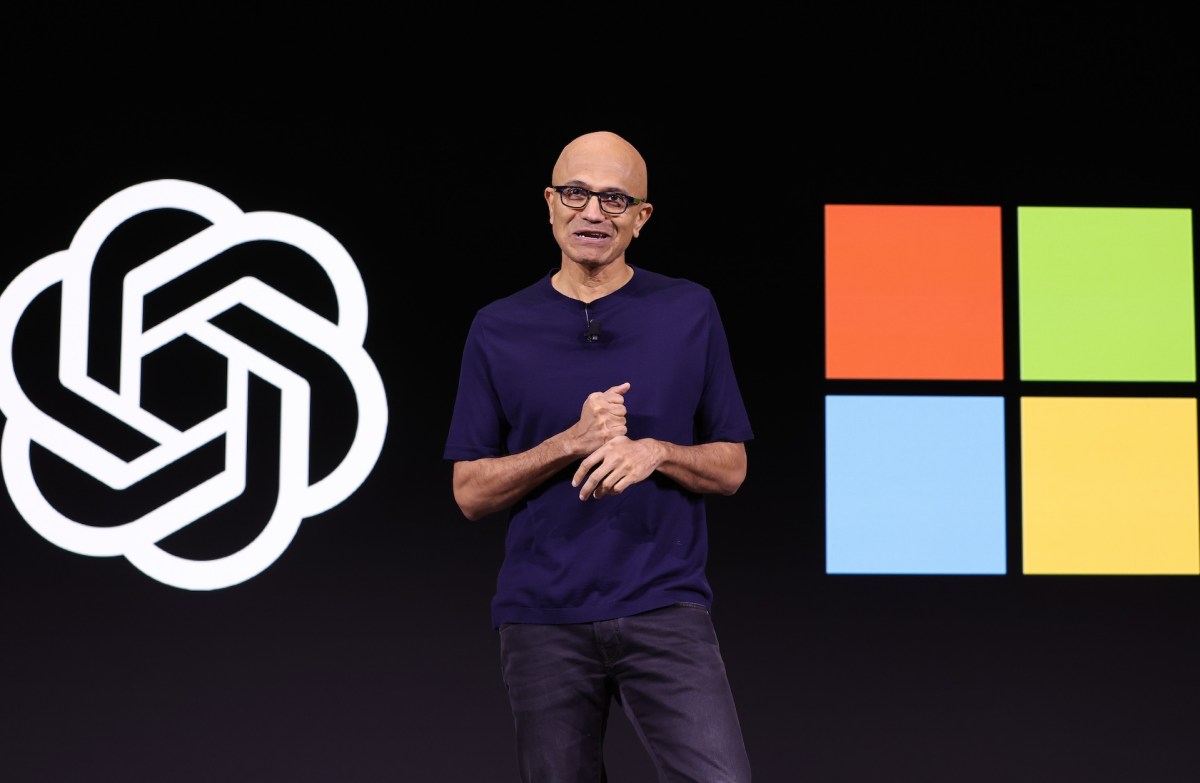
Microsoft CEO Satya Nadella additionally testified in a deposition earlier this yr that “something that’s paywalled needs to be licensed by anybody who desires to make use of it…for grounding or coaching,” and made clear that, if he “had been made conscious that OpenAI had scraped and skilled on data that was behind a paywall,” he would have “invoked [Microsoft’s right to] require OpenAI to retrain its fashions.”
Different admissions minimize in opposition to totally different pillars of the fair-use check: OpenAI’s head of ChatGPT, Nick Turley, wrote in inside communication that publishers face an “existential menace” from merchandise just like the chatbot, that are “largely substitutive” and “will get an increasing number of substitutive as they get higher.”
OpenAI President Greg Brockman described the fashions as “wonderful at information.” Nadella agreed beneath oath earlier this yr that conversing with chatbots “has substituted … providing you with the data proper there on the web site on the AI platform versus needing to go to the underlying supply.”
That type of language speaks to how the expertise may straight compete with, moderately than rework, the unique work.
A Microsoft doc states that there’s a “actual danger” that generative AI may “considerably disrupt the employment of the very individuals who generated the info on which the muse mannequin was skilled.”
The sheer scale of the copying is putting. The paperwork reveal for the primary time that OpenAI’s mid-training datasets alone comprise greater than 91,692 copies of works revealed by the NYT, Every day Information, and Heart for Investigative Reporting. A Frequent Crawl-derived dataset included greater than 2 million paperwork from nytimes.com alone.
In a January 2023 inside memo, Hecht referred to as it “an astonishing theft of unprecedented proportions” and “the biggest theft of labor in human historical past.”
The submitting lays out in new element how OpenAI and Microsoft went about buying the plaintiffs’ content material, together with scraping it from the Bing Index.
“OpenAI delivered your entire GPT-3 coaching dataset to Microsoft, which Microsoft used to guage tips on how to implement OpenAI’s fashions inside its personal industrial merchandise,” the submitting reads. “Microsoft equally supplied coaching information to OpenAI by initiatives referred to as Undertaking Taxi and Undertaking Mango.”
The businesses allegedly assembled the Undertaking Mango information right into a coaching dataset that incorporates copies of a minimum of 160,903 distinctive works from the information publishers.
With a purpose to get probably the most out of their scraping, OpenAI staff allegedly got here up with a plan to avoid paywalls with out detection. The filings present that when OpenAI researcher Nick Ryder informed Brockman a few “hack to get round nytimes paywall,” Brockman replied: “ah good.”
OpenAI staff additionally allegedly constructed coaching datasets like WebText and WebText2 that disproportionately relied on scraped information content material. Additionally they allegedly pulled thousands and thousands of articles from Frequent Crawl, a free, open repository of internet crawl information. The findings additionally describe deliberate efforts to strip copyright notices from coaching information earlier than it reached the mannequin, since researchers “wouldn’t need mannequin outputting” “copyright notices” to customers.
“The proof revealed right here for the primary time exhibits that OpenAI and Microsoft knew that what they have been doing was unsuitable,” Steven Lieberman, counsel for the New York Every day Information, stated in an announcement shared with TechCrunch.
OpenAI and Microsoft didn’t return requests for remark.
While you buy by hyperlinks in our articles, we might earn a small fee. This doesn’t have an effect on our editorial independence.